
Saratoga Springs City Directories at NYSL
The New York State Library city-directory table lists Saratoga Springs microfilm from 1872 through 1944 and for 1946. Its table also lists a small but valuable set of local telephone books. These are on-site materials in NYSL's 7th-floor Microforms Area and do not circulate. That access rule matters: a catalog lead can identify the reel, but reading the name, address, and section headings still requires an in-person visit.
The official table does not identify a publisher for each Saratoga Springs run. It also does not verify a continuous reverse-directory series or supply a page image. Inspect the title page, contents, and abbreviation key before treating any field as printed in that edition. A directory entry can point to a household or a business presence, but it does not establish ownership by itself.
| Collection | Years | Where Held | Access |
|---|---|---|---|
| Saratoga Springs directories | 1872–1944; 1946 | New York State Library, 7th-floor Microforms Area | On-site, non-circulating microfilm |
| Saratoga Springs telephone books | 1922; 1940–42; 1945–47; 1949–50 | New York State Library, 7th-floor Microforms Area | On-site microfilm |
| Saratoga County directories | 1870/71; 1890 | New York State Library | Microfilm collection; inspect the listed edition |
| Saratogian and local newspaper runs | Saratogian from 1855 | Saratoga Room, Saratoga Springs Public Library | Library local-history research |
For a gap between listed directory years, use the telephone-book reel only for subscriber evidence. It is not a complete count of Saratoga Springs residents. County directories can also separate a city name from a nearby-town name, which is useful when the same surname appears more than once in Saratoga County.
Note: Photograph the title page and abbreviation key with each finding so the year, scope, and original spelling stay attached to the transcription.
Saratoga Springs Directory Clues at the Saratoga Room
The Saratoga Room at Saratoga Springs Public Library, 49 Henry Street, brings together rare books, maps, manuscripts, photographs, local newspapers, genealogy help, and links to New York Heritage, DPLA, digital exhibits, and Empire ADC finding aids. It is a practical local stop when the NYSL microfilm tells only part of a household story. The room's listed phone number is 518-584-7860, and its special hours should be checked before traveling because they can change.
Newspaper material adds events that a directory may omit. The Saratogian's run begins in 1855, while NYSL catalogs additional Saratoga titles. An obituary, legal notice, marriage announcement, or business notice can test whether a name line belongs to the same person. Library databases include census and obituary resources, but access can depend on being in the library or holding a library card.
The Saratoga Room source page shows the library's local-history entry point.
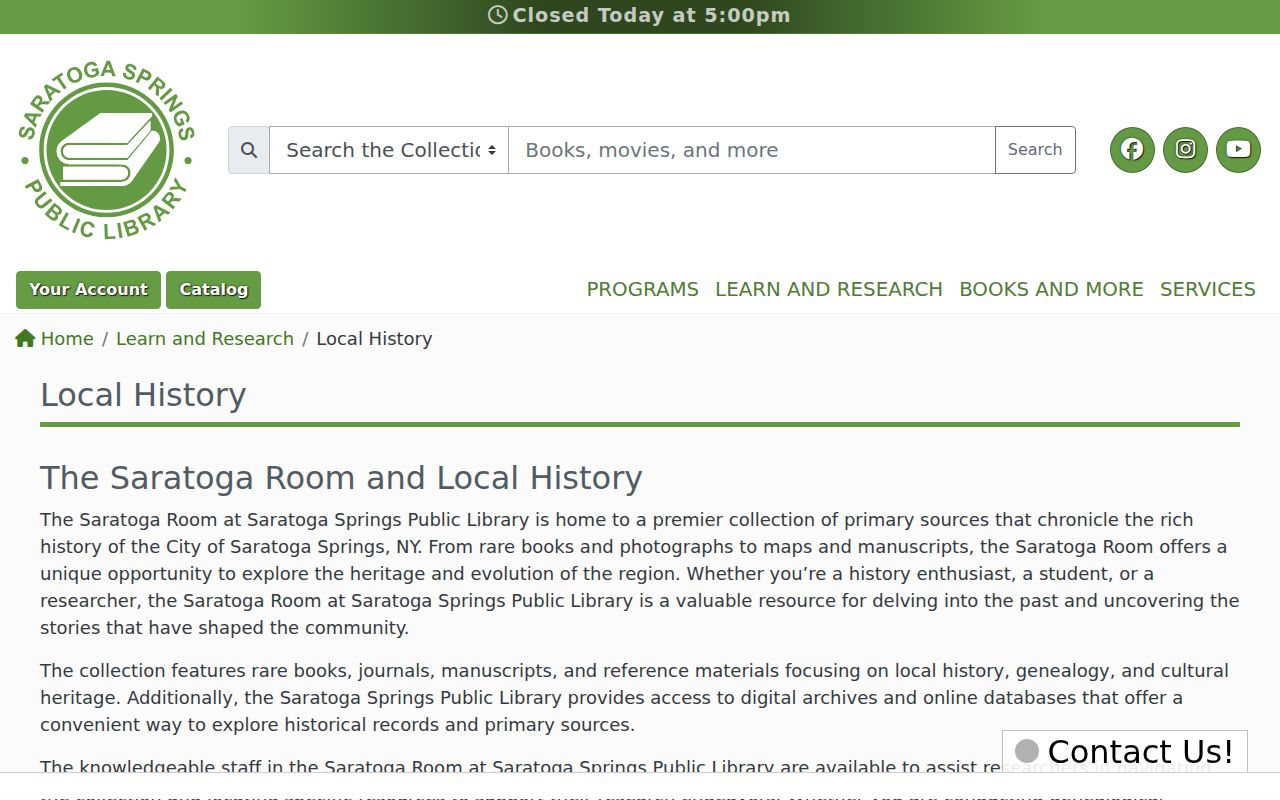
Use the room to compare an exact directory year with its nearby newspapers, maps, and archival finding aids instead of assuming a missing name resolves the question.
Saratoga Springs Telephone Book Intervals
The telephone-book reels are especially helpful around the breaks in the city-directory list: 1922, 1940 through 1942, 1945 through 1947, and 1949 through 1950. They can preserve a name-and-address trail when a telephone subscription existed. They cannot show every person in a home, and a listed number may belong to a business or another household member.
Search the closest historical book first, then note whether the telephone book carries the same spelling and street form. A disagreement is a lead, not a correction. Street numbers, surname initials, and business names change, and the edition itself may define how it groups subscribers.
NYSL's directory inventory is the safest starting point for choosing the available reel.
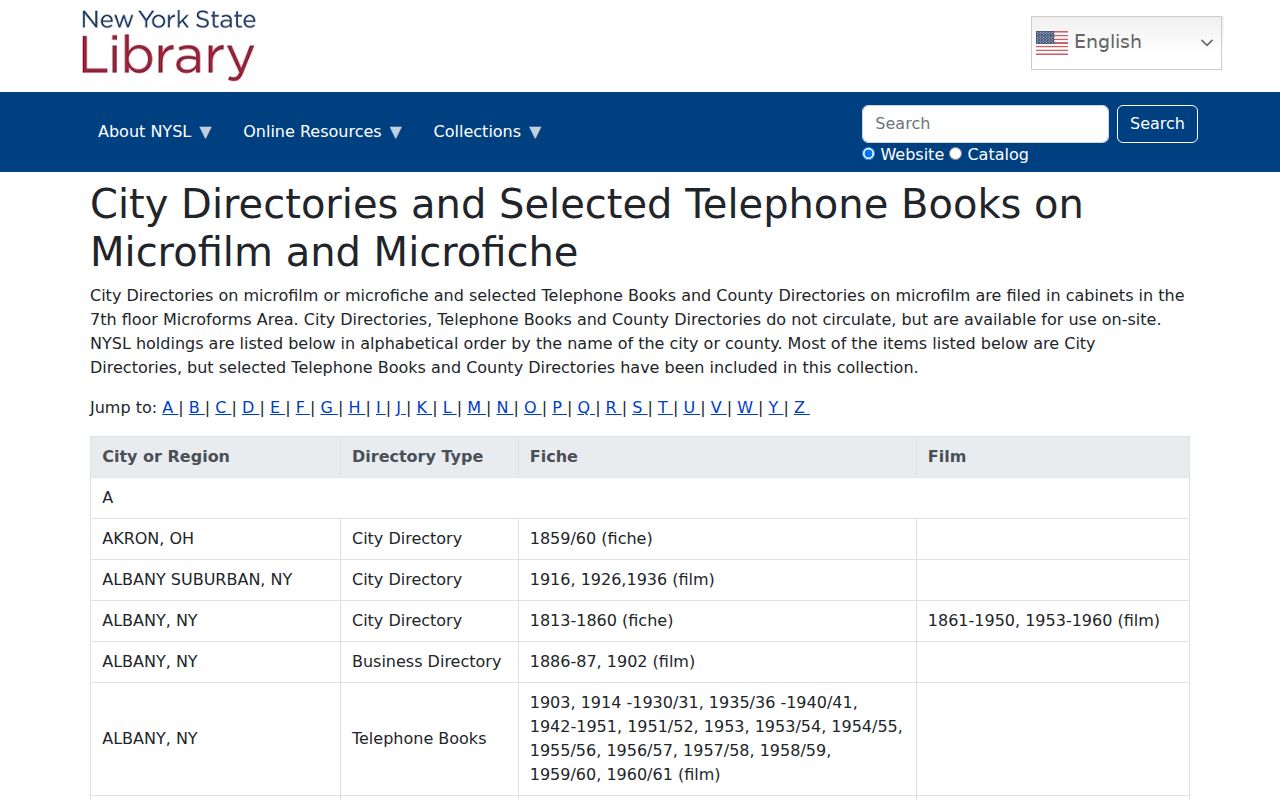
The inventory confirms the available spans, while the reel and its title page determine what the particular book actually prints.
Reading a Saratoga Springs City Directory
No live Saratoga Springs directory page was verified in the research materials. For that reason, do not quote a model entry or promise that every edition prints an occupation, spouse, owner mark, or street section. Instead, make a small inventory after inspecting the specific volume. Record only the elements that are visibly printed, including the section name and the exact punctuation.
| Printed name or initials | Capture exactly as shown, including middle initials, married names, or abbreviations. |
|---|---|
| Street address | Record the number and street only if the inspected line supplies them. |
| Occupation or business | Note it only when the edition prints it, and keep it separate from a residence claim. |
| Section and year | Identify whether the line comes from a name, business, telephone, or street section and cite the edition year. |
| Symbols or abbreviations | Copy the volume's own key before expanding any shorthand in a research note. |
- Criss-cross directory
- A directory arranged by street and number rather than chiefly by surname. A Saratoga Springs run must be inspected to confirm whether it includes this section.
- Householder index
- A name arrangement that may identify a household contact. It does not necessarily list every occupant at the address.
- Abbreviation key
- The volume's explanation of its shortened labels, usually near the opening pages. It controls how the entry should be read.
Saratoga Springs City Directory Geography After 1915
Saratoga Springs changed from town and village government to city government in 1915. A person in an early directory can therefore appear in village or town tax material, while later municipal records use the City of Saratoga Springs. The legal lot or street may provide the bridge, but the administrative label needs to match the date of the record.
The City Historian's holdings include historical maps, and the city collection covers roughly 1773 to 1991. Maps help translate an old street description or landmark into a period location, but they are planning and assessment context, not a survey. For current parcel work, use the modern address resources on the Saratoga Springs Street Directory rather than treating the historical shelf as a present-day occupancy source.
- Choose a directory year on each side of the known event or move.
- Transcribe the name, address, section, and every printed abbreviation without modernizing it.
- Check adjacent years and the telephone-book reels where the NYSL list provides them.
- Pair the address with the nearest available federal or New York State census at the County Historian.
- Use newspapers, a deed reference, or a period map to test a move, name change, or street change.
A disappearance can mean an omitted volume, a move, a temporary absence, a new street number, or non-inclusion. It is not evidence of a death. The County Historian's voter lists from 1912 to 1975, census microfilm, cemetery tables, maps, and surname files provide a separate inspection path when the historical series ends abruptly.
Saratoga Springs Directory Archive Books That Name People
The City Historian holds narrower series that can move a historical search forward when an ordinary local directory does not. Village assessment and tax material spans 1866 to 1915, but 1870 and 1880 are documented gaps. Receiver of Taxes and Assessments account books run from 1866 to 1906, and tax-sale books identify owners, buyers, and lot descriptions in their listed series. These are inspection sources, not a universal online name index.
Two unusual leads should be used only for the narrow question they answer. Dog registers from 1911 to 1913 record licensed-dog owners, addresses, breed or color, and fees. The Greenridge Cemetery Book, 1843 to 1847, records lot sales and burial-right resolutions. Neither collection is a complete resident roll or a substitute for a vital record.
Chattel-mortgage material from 1849 to 1915 can name mortgagors and mortgagees, while the listed tax-sale books add owners, buyers, and lot descriptions for their respective runs. These records can explain a family, property, or financial connection when a directory has a spelling problem. They do not establish that every named party lived at the lot, and they should be read with the volume date and series description.
Saratoga Springs Photographs as Directory Context
The Bolster collection at the Saratoga Springs History Museum is a visual companion to address research. The museum reports roughly 325,000 photographic images, with Old Saratoga material mainly from 1900 to 1960. Its archive includes people, homes, businesses, religious buildings, hotels, springs, racetrack scenes, and aerial photographs. Research is available Monday, Tuesday, and Friday from 10 to 3 by appointment.
The Bolster archive collection page illustrates the kind of historic image research available.
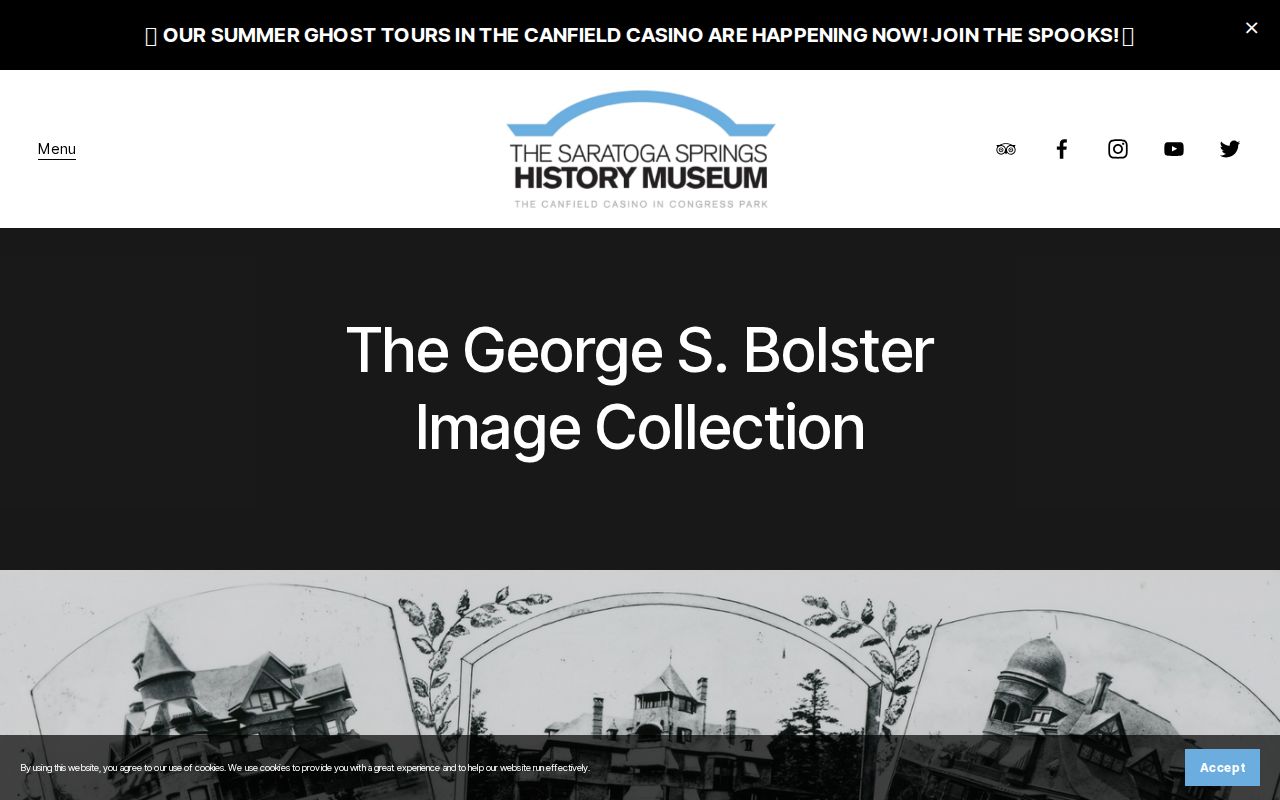
A dated image can help test whether a building or business stood at a location, but it does not identify every person connected to that address. Ask the museum about captions, dates, and reproduction permission.
The collection's early aerial views can also place a block within its period street pattern. Compare the image date with the printed volume year and a map before deciding that a later parcel number or landmark means the same location.
Limits of a Saratoga Springs City Directory
A city directory is a period publication, not a complete census and not a title record. It may distinguish a resident, boarder, telephone subscriber, visitor address, or business differently, if it distinguishes them at all. The safest conclusion is the narrow one supported by the line, edition, and a second record. An owner and an occupant can be different people.
When a directory result needs a current check, compare it with an official record that answers the precise question. Historical staff at the Saratoga Room, City Historian, County Historian, and History Museum can direct a researcher to collections that are not searchable on the open web. Preserve the holding location, year, reel or volume, and page with every finding.
Note: A missing entry may reflect the edition's coverage or a catalog gap, so confirm the result with at least one independent record before relying on it.